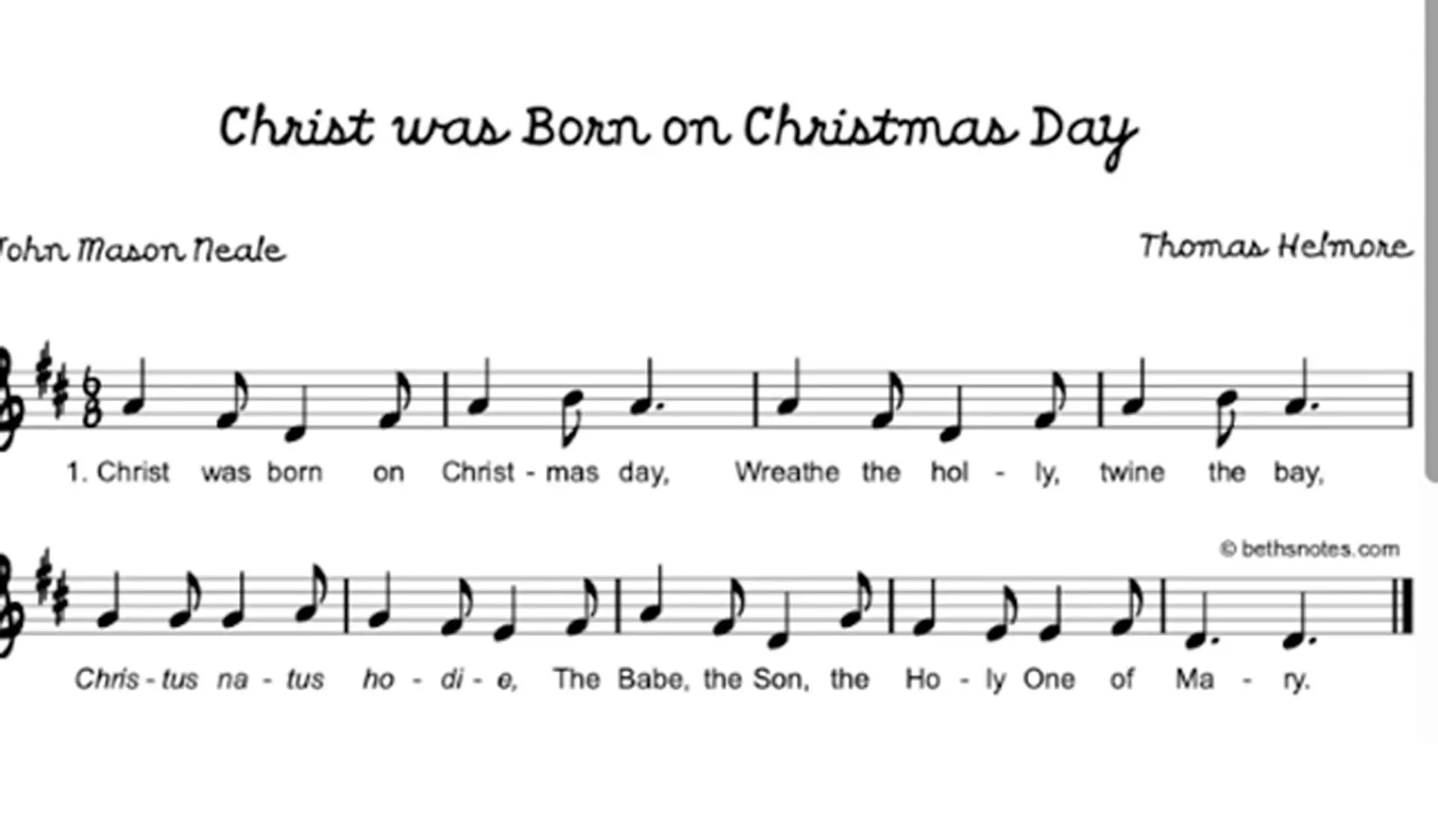
Christmas carols are more than beautiful melodies we hear every December. They are lessons set to music. Long before many people could read the Bible, these songs helped tell the story of Jesus’ birth in a way everyone could understand. Even today, carols continue to teach faith through simple words and familiar tunes.
In The Sounds of Christmas, each song is shown as a doorway into the Christmas story. When we slow down and listen to the lyrics, we learn not only what happened on the night Jesus was born, but also why it matters. Christmas carols help us understand who Jesus is, why He came, and what His birth means for the world.
The Birth Story Told Through Song
Many Christmas carols follow the Bible story very closely. They speak about Mary and Joseph traveling to Bethlehem, angels appearing in the sky, shepherds watching their sheep, and a baby laid in a manger. These details come straight from Scripture, but music helps them stay alive in our memory.
Songs like O Come All Ye Faithful invite people to come and see the newborn King. The lyrics encourage joy, worship, and wonder. Other carols focus on the humble setting of Jesus’ birth. Instead of a palace, He was born in a stable. Instead of a royal bed, He rested in a manger.
These lyrics teach an important lesson. Jesus did not come with wealth or power. He came quietly and humbly. Through song, listeners learn that God chose simplicity to enter the world.
The Sounds of Christmas explains how these carols helped people understand the Christmas story when Bibles were not widely available. Singing became a way to learn Scripture, remember it, and pass it on.
Jesus as Light and Hope
One of the most common themes in Christmas carols is light. Many songs describe Jesus as light shining in the darkness. This is not an accident. Light is a powerful symbol that people understand easily.
Winter is a dark time of year. Days are shorter, and nights are longer. In the past, this darkness felt even stronger without electricity or modern comforts. When people sang about light during Christmas, it reminded them that hope had come into the world.
Carols speak of a “holy light,” a “new and glorious morn,” or a star shining brightly. These images point to Jesus as the one who brings hope, truth, and God’s presence.
The Sounds of Christmas shows how this theme appears again and again across cultures and centuries. In times of war, sickness, or fear, people sang about light to remind themselves that God had not abandoned them. Jesus’ birth was seen as the beginning of hope in a broken world.
Angels, Shepherds, and the Message of Joy
Christmas carols also teach us about who first heard the news of Jesus’ birth. Angels appeared not to kings or leaders, but to shepherds, ordinary workers watching their sheep at night.
Many songs describe angels singing and announcing “good news of great joy.” This teaches an important truth. The message of Jesus was meant for everyone, not just the powerful or wealthy.
Shepherds in carols are shown listening carefully, then responding with action. They go to see the child. This shows that faith begins with listening and responding.
Through these lyrics, The Sounds of Christmas reminds readers that Jesus’ birth brought joy meant to be shared. The songs teach us that God values humility and welcomes ordinary people into His story.
Peace, Love, and Humility
Christmas carols do more than tell history. They teach values. Many songs speak about peace on earth, love for others, and humble hearts.
Peace is one of the strongest messages in Christmas music. Carols remind listeners that Jesus came to bring peace between God and humanity, and peace among people. This does not mean life will be easy, but it means hope and healing are possible.
Love is another key theme. Christmas songs speak of God’s love shown through the gift of His Son. This love is gentle, patient, and sacrificial.
Humility is also central. Jesus was born in a simple place, to a young family, surrounded by animals. Carols teach us that greatness does not come from status or wealth, but from obedience and love.
By singing these songs year after year, people are reminded to live differently, not just during Christmas, but all year long.
Learning Faith Through Music
One of the reasons Christmas carols are so powerful is that they make faith easy to remember. Music helps words stay in our minds. Even people who do not attend church often know the lyrics to Christmas songs.
The Sounds of Christmas explains that for many people in history, carols were their first introduction to Bible stories. Through music, they learned about Jesus’ birth, God’s promises, and the meaning of salvation.
This is still true today. A child may learn more about Christmas from singing carols than from reading a long explanation. Music reaches the heart as well as the mind.
Why Lyrics Still Matter Today
Because Christmas songs are so familiar, it is easy to stop paying attention to the words. We sing without listening. But when we slow down and think about the lyrics, Christmas becomes deeper and more meaningful.
The words teach us who Jesus is, why His birth matters, and what it means for our lives. They remind us of hope when we feel tired, peace when we feel anxious, and love when we feel alone.
The Sounds of Christmas invites readers to listen carefully and reflect on the meaning. It encourages us to hear Christmas carols not as background music, but as messages of faith and truth.
When we understand the lyrics we sing, Christmas changes. The songs become more than tradition. They become teachers.
Through simple words and familiar melodies, Christmas carols continue to tell the story of Jesus’ birth. They remind us of light in darkness, joy in humility, and peace through love.
The Sounds of Christmas helps readers hear these songs with new ears and a new understanding. It shows that music is not just part of Christmas, it is one of the most powerful ways the story of Jesus has been shared across generations.